Sovereign Tower Audience Chamber System
Morning petitions that seed quests, recruits, and faction swings
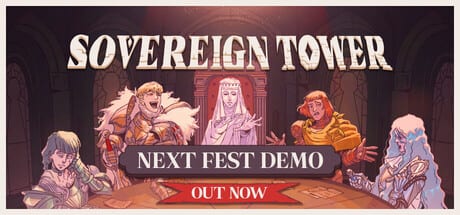
The audience chamber is where Sovereign Tower’s management fantasy clicks — you sit on the throne, listen to petitioners, and decide who gets help, who waits, and who leaves angry. Wild Wits uses mornings to drive everything else: without audience choices, the Round Table has nothing to resolve, annex servants never arrive, and secret routes like the Goose Quest never trigger.
Audiences happen before tower exploration and evening assignments. Treat them as the strategic layer; treat the Round Table as execution. Read How to Play first if you are still learning UI flow.
Who appears in audience
Petitioner types confirmed across demo materials and previews include:
- Subjects with grievances — villagers, merchants, sailors, mystics seeking roads, relic recovery, or monster relief.
- Would-be knights — recruitment opportunities documented on Recruit Knights and the Knights Hub.
- Servants and specialists — blacksmiths, witches, couriers who unlock Annexes or seed regional quests.
- Threats and rivals — assassins, usurpers, and nobles testing your audacity; some tie into Brunhilda rewind routes on How to Get Brunhilda.
- Comedic crises — the Bathhouse Goose, memed in Steam copy but mechanically a real quest chain.
Advisor Arlin comments on many petitions. His adjectives are often mechanical hints — especially goose stage two — not optional banter.
Decisions you make
Each petitioner typically offers dialogue branches:
- Accept — creates or advances a Round Table quest, spends Treasury, or flags a recruit.
- Defer / conditional accept — sometimes preserves resources at faction cost.
- Reject — avoids immediate spending but may anger People, Merchants, or Nobles.
There is rarely a free lunch. Accepting every plea overwhelms your knights; rejecting everything collapses faction goodwill. Use the Faction Balance Tracker when two petitions conflict — a classic demo tension is Merchants wanting guarded trade while People demand famine relief.
Factions in audience
Six groups appear in wiki tooling and demo discussion:
| Faction | Audience themes |
|---|---|
| Merchants | Trade routes, tariffs, caravan protection |
| Mystics | Rituals, curses, magical beasts |
| Scholars | Relics, documentation, research access |
| Nobles | Honor, punitive justice, appearances |
| People | Food, safety, local disasters |
| Treasury | Budget limits on what you can promise |
Deep rivalries and long-term events are covered in the Faction Guide. Audience choices are the fastest way to move meters before assignments multiply effects.
From audience to Round Table
Accepted problems become quest cards for the same day (or scheduled follow-ups). The Round Table UI explicitly references obligations from “earlier in the day.” Mechanics detail: Round Table system.
Examples:
- Accept goose crisis → Goose Quest cards appear.
- Accept beast reports → Beast Hunt assignment unlocks.
- Accept Groveshire or Gavault couriers → main branch cards enter the pool (walkthrough hub).
If you forget what you promised, open the assignment list before leaving the throne room.
Recruitment and annex hooks
Audiences are the primary recruitment vector for servants who enable annex construction with the Lady of the Tower:
- Hire a blacksmith → forge annex for weapons (Items gear).
- Hire a witch → alchemy annex for stat potions.
- Recruit standard knights → expand Round Table options per Knight Roster.
Missing a servant event may require rewinds to unlock Annexes and Crafting on optimal timelines.
Exploration between audience and assignments
After audiences, you explore the tower — speak with knights, visit the Lady, use Lady Alwena’s Intendancy, craft gear. Exploration does not replace audience decisions; it prepares you to fulfill them. Lady Alwena reveals one knight attribute per day, invaluable before resolving audience-spawned hunt or diplomacy cards.
Audience difficulty pacing
Act 0 audiences teach mechanics with softer penalties (Act 0 walkthrough). Act 1 audiences stack regional stakes from Groveshire or Gavault plus optional crises.
New players should accept fewer petitions until they can read stat icons via Knight Stats and the Knight Quest Matcher.
Common audience mistakes
- Accepting more quests than available knights.
- Ignoring Treasury limits — promises cost coin later.
- Rejecting every merchant plea, then failing Merchants when you need roads on the Kingdom Map.
- Dismissing Arlin clue wording before Goose Quest stage two.
- Skipping recruit events that gate secret knights on Secret Knights.
Rewinds and audiences
Demon time rewinds reset mornings. Use them to retry audience branches that lock recruits or faction thresholds. Brunhilda’s route specifically requires telling Mathilda you know the rebel on day 3 after rewinding — an audience-state change, not a Round Table fix.
Related pages
- Round Table — evening execution.
- Demo Walkthrough — chronological petition timing.
- Systems Hub — full mechanic overview.
- Release and Demo — petition changes after patches.
Audiences embody Sovereign Tower’s tagline — Your Reign, Your Rules — because every promise becomes a quest card someone at the Round Table must answer for.
Frequently Asked Questions
Quick answers to the most common questions.
How many petitioners appear each day?
The demo varies by story phase — Act 0 is lighter; Act 1 stacks regional and optional crises. Accept only what you can assign that evening.
Can I reject the Bathhouse Goose?
Often yes, but you may delay or skip Chester recruitment until a rewind. See [Goose Quest](/walkthrough/goose-quest/) for accept timing.
Do audience choices affect Treasury immediately?
Some promises spend or commit Treasury right away; others bill when quests resolve. Track both audience and Round Table outcomes in the [Faction Balance Tracker](/tools/faction-tracker/).
Where do new knights come from?
Many join through audience recruitment events — see [Recruit Knights](/guides/recruit-knights/). Secret knights usually need quest chains like [Beast Hunt](/walkthrough/beast-hunt/) instead.
Is Arlin's dialogue always important?
Not every joke hides a flag, but goose clues and rebellion hints are mechanical. When in doubt, note exact wording before choosing.